Washer Repair
Diagnosis for Samsung front-load, top-load and combo washers in San Francisco and the Bay Area, covering fill, drain, door and vibration problems.

Specialized Samsung Appliance Repair in San Francisco
Mon–Sat: 8:00 AM – 7:00 PM
Match your washer type, read the label and try the outside checks before arranging a visit.
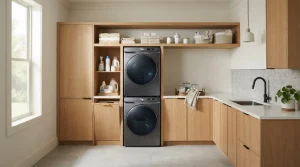
Laundry in San Francisco often happens in a hallway closet, a shared basement room or a tight stacked setup, and Samsung washers have to fit those spaces. The families below share one drain-and-fill logic but differ in how the drum loads and how much electronics sit behind the panel.
The prefix tells you the type: WF is a front-load washer, WA a top-load washer, and WD or WH a washer-dryer combo. Series names are shown where Samsung uses one.
The model label is usually on the back panel of a top-load washer near the top edge, and inside the door opening or along the door frame on a front-load unit. Combos and laundry hubs follow the same logic, so check the door frame first. The number is long, so photograph it rather than copying it by hand.
Washer codes include 4C for a water-supply problem, 1E for a water level or leak sensing error, 3C for a motor error, and dS when the door is not detected as closed and locked. Cb is a calibration mode rather than a fault. The error code library lists the rest.
Never open the cabinet or run a washer that is leaking onto the floor beside electrical outlets. In a flat or condo, shut the supply valves and tell the building manager if water reached a neighbor’s unit.
If a code repeats or the symptom returns after a reset, see Samsung washer repair for how a visit runs, or send a request from the contact page. We diagnose first, provide a written estimate and wait for your approval. For a musty drum, start with this smell guide.
Stacked laundry, closet installs and shared utility rooms all affect how a washer behaves. A washer under a dryer vibrates differently from a free-standing one, and an uneven floor in an older building can trigger imbalance stops even with a normal load. The drain standpipe matters too: if it is too short or the hose is pushed far down into it, water can siphon out early or back up. Mention these details when you book, because they help narrow the cause before anyone arrives.
Combos and laundry hubs add one more variable. Because one drum washes and dries, lint, moisture and detergent residue gather in the same area, so regular gasket wiping and a door left slightly open between cycles help prevent the smell and sensor trouble that follow.
Look near the top of the back panel on top-load units, and in the door opening or frame on front-load units and combos.
The drum, drain and fill checks are similar, but the drying side adds a heater and airflow path, so the model number matters even more.
Re-seat the door until it latches, clear the seal of trapped fabric and restart once. If the code returns, the latch or its switch needs a technician.
Better not. Shut the supply valves and stop using it until the source of the leak is found, particularly in a stacked or upper-floor setup.
Yes. A stacked pair vibrates together and shares a footprint, so level the floor and mention the stack when you book.
Diagnosis for Samsung front-load, top-load and combo washers in San Francisco and the Bay Area, covering fill, drain, door and vibration problems.
The WA40A3005AW/A4 is a current top-load washer in the WA3000J series, listed at 4 cu ft. Off-balance loads and slow drains are…
The WA41A3000AW/A4 is a current top-load washer in the WA3000J series, listed at 4.1 cu ft. Leaks, slow fills and odors are…
Top-load Samsung WA44A3205AW/A4 washer problems in San Francisco: lid lock, filling, draining and spin faults checked before any repair.
Samsung WA45T3200AW/A4 top-load washer repair for San Francisco homes: no-drain, no-spin, lid and noise faults diagnosed first.
Samsung WD53DBA900HBA1 Bespoke washer-dryer combo repair in San Francisco: wash, drain and drying faults diagnosed in order.
Samsung WD90F53AVBUS Bespoke washer-dryer combo repair in San Francisco, covering unfinished cycles, damp loads and noise.
Samsung WF45T6000AV/A5 front-load washer repair in San Francisco: door lock, gasket, drain and spin faults diagnosed before any parts are ordered.
Samsung WF53BB8700AVUS Bespoke front-load washer repair in San Francisco, with checks on door, drain, drum and connected-app problems.
Samsung WF53BB8900ADUS Bespoke front-load washer repair in San Francisco: spin, drain, door and sensing faults checked first.
Samsung WH46DBH100EWA3 Bespoke laundry hub repair in San Francisco: tight-closet installs, drainage, drying and door faults diagnosed.
Samsung WH46DBH500EVA3 Bespoke laundry hub repair in San Francisco, with notes for landlords managing several identical units.
Samsung WW25B6900AW/A2 compact washer repair in San Francisco: small-drum balance, drain, door and install faults diagnosed.
How Samsung gas, electric and induction cooktops differ, what their codes mean, and which owner checks are safe before booking a San…
The Samsung dishwashers we repair in San Francisco kitchens, with common drain, fill, drying and leak complaints plus safe owner checks.
Electric, gas and heat pump Samsung dryers we repair in San Francisco, with vent-related symptoms, codes and safe owner checks.
Samsung over-the-range and countertop microwaves we repair in San Francisco, with common faults, display codes and outside-only owner checks.
Samsung gas, induction and dual-fuel ranges we repair across San Francisco, with igniter, oven heat and panel complaints and safe owner checks.
Browse the Samsung French-door, side-by-side and top-freezer refrigerators we repair across San Francisco, with Bespoke and Family Hub models.
Share a few details and we’ll confirm an appointment. Prefer to talk? Call us and we’ll help right away.