

Specialized Samsung Appliance Repair in San Francisco
Mon–Sat: 8:00 AM – 7:00 PM
Clean clothes should not come out smelling of damp basements. Learn where odor hides in a front-load or top-load Samsung, and the safe steps to clear it.
You open the door expecting fresh laundry and get a smell like a wet towel left overnight. It clings to the load and returns after every cycle. The odor is almost never the clothes themselves. It builds in the places that stay damp: the door seal, the drawer, the drain path and sometimes the standing water in a slow-draining washer.
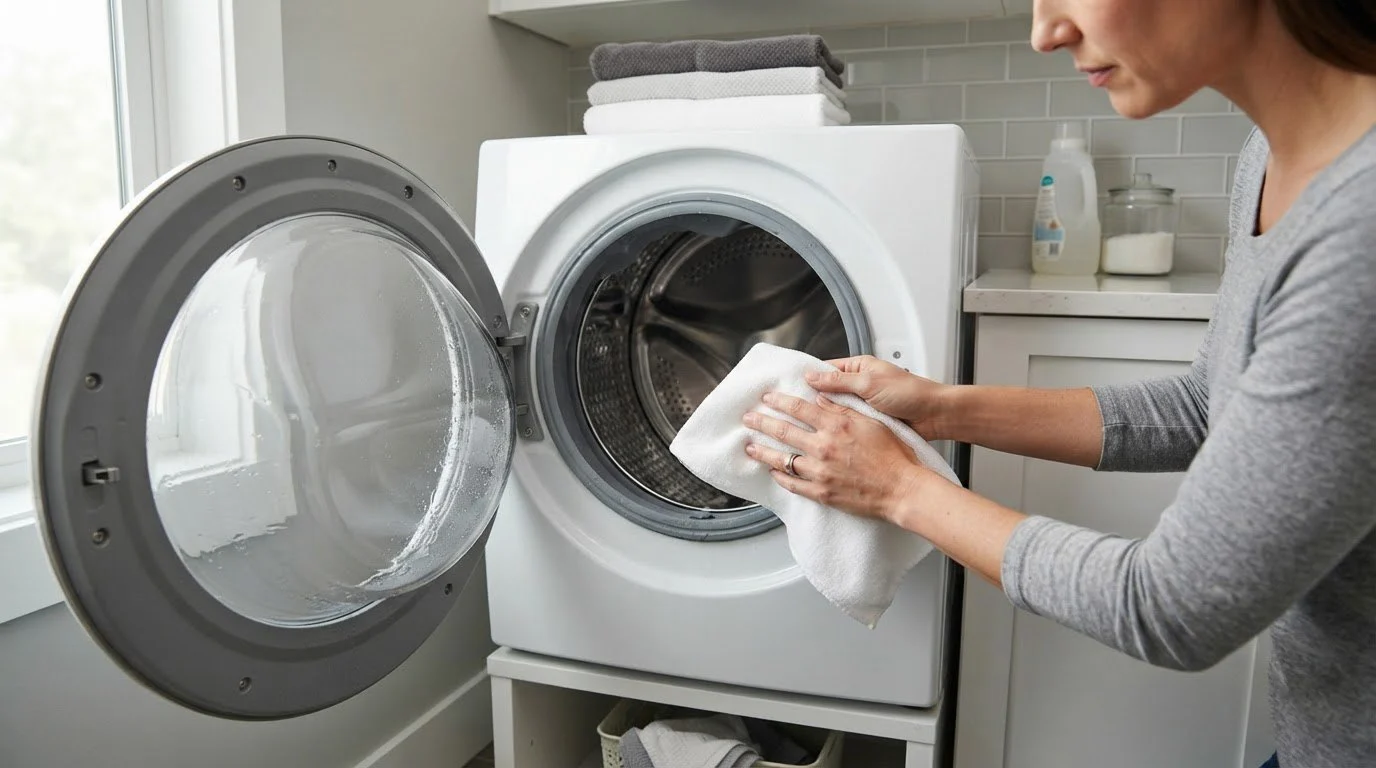
The folds of the rubber boot hold a thin film of water after every wash. Soap scum, skin oils and lint feed a film of mold, which smells sour. Closing the door right after the cycle keeps that moisture sealed in, and a laundry closet with little airflow makes it worse.
Using too much detergent or softener leaves a gel behind the drum and in the drawer cavity. In cool washes, those products do not rinse out fully. The washer then smells of old soap rather than mold, though both feed each other.
The space between the drum and the outer tub is not visible and is hard to dry. Buildup there is the reason a surface wipe-down sometimes does not remove the smell. The drum clean reminder listed as Samsung washer 0 error code is described as a drum clean reminder left on, not a fault, and it exists for this reason.
If water remains in the tub or the hose is arranged so that wastewater siphons back or sits in a trap, the stagnant water turns foul. A drain that is slow also leaves residue. See the entry for Samsung washer nd error code, which covers a no-drain error.
A top-load washer has a lid that tends to stay shut, an agitator or pulsator area where lint builds, and a tub that may hold moisture all week. Wipe under the lid rim and around the opening of the drum.
Do not mix cleaning chemicals, and do not pour a harsh product into the drum beyond what the manual recommends. Sealed rubber and sensors do not like strong solvents.
San Francisco’s damp, cool air and closets without windows keep laundry areas humid. Stacked units in a hall closet rarely get air movement. A cracked-open door and a small vent grille in a closet door can help, and where the laundry area is a basement garage, a dehumidifier helps. A washer with a long drain hose looping into a standpipe also needs to be secured so it does not drain slowly.
If cleaning and drying do not cure the smell, check whether the washer leaves puddles in the drum after the cycle, whether it sounds like it drains slowly, or whether the gasket shows black patches that return quickly. These are signs the drain path or the seal needs a technician. A burnt or electrical smell is a different case: switch off at the breaker and do not run the washer.
We start with diagnosis of drainage, gasket condition and residue, give a written estimate and wait for approval before any work. For more about what we handle, see Samsung washer repair and Samsung washers. Models such as the Bespoke Samsung WF53BB8900ADUS and the top-load Samsung WA41A3000AW/A4 handle moisture differently, so share the model number, usually printed near the door opening or lid hinge.
People often clean the gasket once, feel satisfied and see the smell return within weeks. The conditions that created it are still in place: a sealed door, a tub that does not dry, and a bit more detergent than the load needs. Smell is a lagging indicator. By the time you notice it, the film is already established, so a routine matters more than a single deep clean.
Washing in cold water saves energy but dissolves residue less well, so many households alternate with a warmer wash for towels and bedding. Heavy loads of towels, gym clothes and pet bedding hold the most moisture and body oils, and they deserve a rinse option and a prompt transfer to the dryer. Letting a finished load sit in the drum for a day is the fastest way to restart the smell, even in a clean washer.
Standing water in the bottom of the drum after a cycle, black growth that returns in days, a drawer cavity that stays wet, or a drain that gurgles are signs the problem is mechanical rather than hygiene. We check the gasket drain path, the drain pump and hose arrangement, and any trap where water can sit. Take a photo of the gasket and the drawer cavity before you clean, because it shows what condition they were in.
The odor may be in the gasket or behind the drum, where a cycle does not reach well. Residue and dampness need drying and wiping, not just another wash.
Usually not. It is a maintenance symptom. A smell with standing water or a slow drain does suggest a mechanical problem.
No. A closed door traps humidity and speeds up mold growth. Leaving it open helps the drum dry.
Yes, perhaps more so, since moist air travels through the drying path too. Models like the Bespoke Samsung WD53DBA900HBA1 benefit from open-door drying.
It can. Surplus detergent builds a film in hidden places and rinses poorly in cool water.
Share a few details and we’ll confirm an appointment. Prefer to talk? Call us and we’ll help right away.