Cooktops
How Samsung gas, electric and induction cooktops differ, what their codes mean, and which owner checks are safe before booking a San…

Specialized Samsung Appliance Repair in San Francisco
Mon–Sat: 8:00 AM – 7:00 PM
A zone that will not heat, a burner that will not light or a panel that keeps beeping gets traced to its cause first.
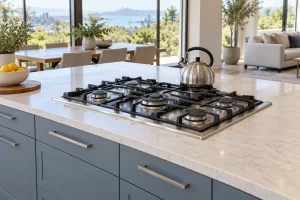
A built-in cooktop is easy to ignore until a zone goes dark in the middle of dinner. Samsung makes gas, electric and induction cooktops, and each one fails in its own way. We look at the burner or zone, the controls that drive it, and the way the cooktop is set into your counter, because in a Bay Area kitchen that cutout, the cabinet below and the vent above all affect what we find.
With gas, the visible clue is the flame. A burner that sparks but stays out, a flame that keeps lifting or turning yellow, or a knob that feels loose all point somewhere different. Spills are the most frequent culprit: sugar and grease drying on a burner head can block the ports or foul the igniter. A technician checks the cap and base alignment, the spark path and the supply to that burner, and only then decides whether a part has failed. For a common version of this, read about a burner that will not ignite.
On glass electric and induction tops the controls are touch-based, so a lot of trouble starts at the panel. Zones may shut off on their own, the panel may beep and ignore touches, or one zone may refuse to heat while the rest are fine. Induction heats the pan, not the glass, so an unsuitable or off-center pot can look like a broken zone. Our note on an induction cooktop that will not detect the pan covers cookware and placement before you assume a part is bad.
These messages come from the Samsung code library for cooktops:
Wipe the glass dry, clear the panel, and note whether the message returns before you decide anything.
For a zone that will not heat, we separate three questions. Is power reaching the cooktop? Is the panel asking the zone to turn on? Is the zone itself able to respond? Each answer rules out a group of causes, so a good diagnosis often ends in a small, specific repair instead of a large replacement. Intermittent faults are the hard ones, such as a zone that works for a week and then drops out. For those, tell us what was on the cooktop, whether the room was steamy and how long the zone had been on, because the pattern points to heat, moisture or a loose connection.
A drop-in cooktop depends on the clearances around it. Induction models need airflow underneath, so a drawer or a pot rack stored right below can trap heat and make zones shut down. Gas models need the shutoff valve reachable and a sound connection, which is work we never ask owners to attempt. Electric and induction tops are wired to a dedicated circuit, often through a junction box under the counter. In condos and rentals we sometimes find a cooktop replaced during a remodel without the original instructions, so we verify the model first and confirm the circuit and venting before testing the zone.
Do not lift the glass, open the cooktop from below, touch gas fittings or bridge any switch.
A gas smell means leave the home, avoid switches and call the gas utility or 911 from outside. Cracked glass, sparks, a burning odor or a zone that will not turn off all mean power it down at the breaker and stop cooking on it. Liquid that has run under cracked glass is a reason to wait for a visit.
Cooktops are less standardized than people expect. Two tops that look alike can use different sensor and board layouts. The label is usually on the underside of the cooktop or on a plate near the edge, which can be hard to reach once the unit is installed, so a photo from the original paperwork or the carton may be easier. Our model number guide explains where Samsung usually puts it. We work from the label you give us. If a range with a built-in top is involved instead, range model pages such as Samsung NSG6DG8300SRAA repair are the closer match.
If you rent, send your landlord or property manager the model label and the symptom, since they may need to approve the work. Where a cooktop was fitted by a previous owner, the cutout and cable length sometimes limit how far it can be lifted, and we plan around that before the visit. In a multi-unit building, tell us about parking and elevator access so the equipment arrives with us.
We confirm the fuel and the symptom, check the supply and the controls, and test the zone or burner that is failing. You receive a written estimate before work begins, and nothing is repaired unless you approve it. If the cooktop is paired with a wall oven, ask about Samsung range and oven repair in the same visit. The wider catalog is on the Samsung cooktops page.
Not necessarily. Try a different, flat magnetic pan on that zone. If it still does not respond, the zone or its board needs a diagnosis.
Liquid or a pot on the touch area can look like a held button. Dry the panel and see if it stops. If it persists, tell us the code shown.
Often the burner parts are reached from above, but the supply side may need access from below. We tell you in advance what the cutout allows.
Cracked glass should be treated as unsafe to use. We can assess the top, though replacing glass depends on the model.
Someone should be there to show us the symptom and approve the estimate before work starts.
How Samsung gas, electric and induction cooktops differ, what their codes mean, and which owner checks are safe before booking a San…
Diagnosis for Samsung dishwashers in San Francisco and the Bay Area, covering drain faults, leaks, fill problems and noisy pumps in tight…
Diagnosis for Samsung electric, gas and heat pump dryers in San Francisco and the Bay Area, from long dry times to door…
Samsung over-the-range and countertop microwave repair in San Francisco and the Bay Area, from no heat and door faults to arcing and…
Diagnosis for Samsung gas, electric, induction and dual-fuel ranges and wall ovens in San Francisco and the Bay Area, with a written…
Diagnosis for Samsung French-door, side-by-side and top-freezer refrigerators in San Francisco and the Bay Area, from warm compartments to ice makers.
Diagnosis for Samsung front-load, top-load and combo washers in San Francisco and the Bay Area, covering fill, drain, door and vibration problems.
Share a few details and we’ll confirm an appointment. Prefer to talk? Call us and we’ll help right away.