

Specialized Samsung Appliance Repair in San Francisco
Mon–Sat: 8:00 AM – 7:00 PM
A slow preheat can come from a loaded oven, a leaking door, a drifting probe or a weak heat source. See what to check before you book a visit.
You switch on the oven, the display counts upward, and you wait. Dinner is late because the oven needs far longer than it used to before it announces it is ready. A slow preheat is annoying, and it is also a clue. The oven is either working harder than it should to reach temperature, or it is being told something that is not true about its own temperature.
An oven heats from the bottom and, on some models, the top, then measures the cavity with a probe. When the probe reports that the set temperature has been reached, the display signals it. A normal preheat takes a while, and the time depends on the set temperature, the number of racks and whether the oven was cold or warm. Our Pr E code page notes that the display showing the oven heating to the set temperature is normal behavior and not a fault. So the first question is whether the delay is truly new.
If the oven shows a sensor message, check the C-20 code page, which covers sensor malfunction. If the oven temperature rises faster than normal, with the cause often a blocked vent at the back of the cooktop, look at C-24. A long-running oven may also stop on its own; the S-01 page explains that safety shutoff is not a failure. And if the oven will not heat at all, tESt means Demo mode, which keeps the oven and electric cooktop from heating.
Technicians solve slow-preheat calls faster when the owner can describe the pattern. Write down the setting you use most, roughly how long the display took to signal ready last month and how long it takes now, and whether the oven is empty or loaded at the time. Mention if the fan comes on, if the oven smells unusual, if you hear clicking before the heat starts, and whether the kitchen feels unusually warm around the control panel. Photos of the display and the label help as well.
Older San Francisco buildings often have long cable runs and shared panels, so a voltage dip when the washer or heater starts can slow an electric element. Kitchens with a range in a closet-like alcove trap heat around the control area. If your oven slowed after the building changed its electrical panel or after a kitchen refit, mention it. For gas models, notice whether the cooktop burners and other gas appliances in the home behave normally, since that helps separate a supply issue from an oven issue.
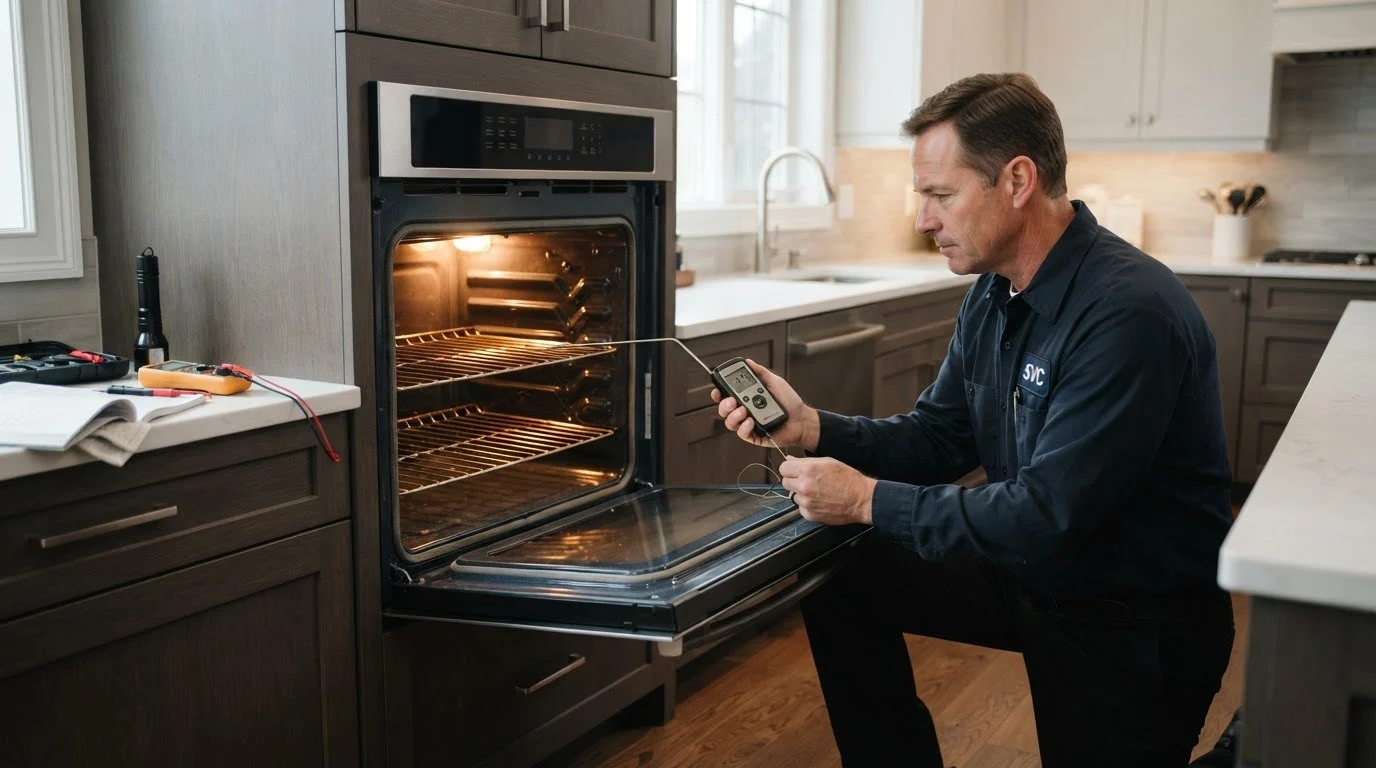
Book when the preheat time keeps growing, when the oven never seems to reach the set temperature, when a code returns, or when baking results change at the same time. A technician measures actual cavity temperature, tests the heat source and the probe, checks the door, and explains the finding. You receive a written estimate and nothing is repaired without your approval.
Read Samsung range and oven repair and Samsung ranges and ovens. Related catalog models include the Samsung NSG6DG8500MTAA gas range. If food also cooks unevenly, see oven bakes unevenly.
It varies with the set temperature, the load and the starting temperature. What matters is a change from your own normal. Track the time over several days.
It can, but a loaded oven, a leaking door or a wrong probe reading are more common. Empty the oven and recheck.
No. It means the oven is heating to the set temperature and is not a fault.
They heat differently. A gas oven starts after the igniter proves the flame. A hesitant igniter lengthens the wait.
Many recipes can start once the display signals ready. If the signal comes too early, the probe may be reading wrong.
Share a few details and we’ll confirm an appointment. Prefer to talk? Call us and we’ll help right away.