

Specialized Samsung Appliance Repair in San Francisco
Mon–Sat: 8:00 AM – 7:00 PM
Water on the floor in front of your washer has a short list of causes. Find out how to tell a door seal leak from a dispenser leak and what to check before service.
The puddle on the floor in front of the machine is the first sign, and the instinct is to wipe it up and hope. In a flat with floors beneath other neighbors, that is a risky habit. Spend a few minutes noticing where the water starts and the answer often becomes clear.
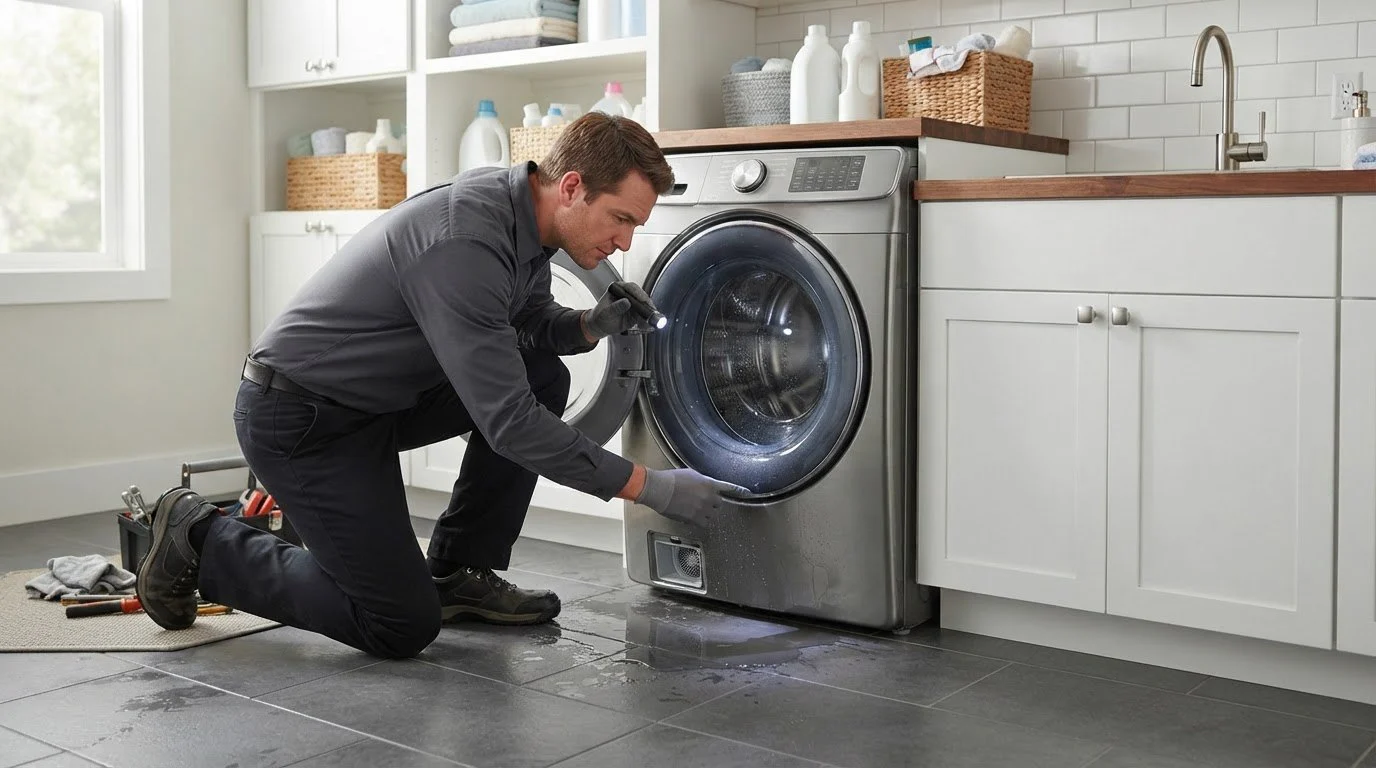
Water right under the door, running down the glass, points to the door boot and the gasket. Water that appears at the top front, under the detergent drawer, suggests overflowing suds, a clogged drawer or a supply issue. Water at the back or at the hose connections is a plumbing problem, not a washer leak. Water that arrives only at the end of the cycle during drain tells another story again.
The rubber gasket has deep folds that collect hair, lint, a stray sock fragment or a tissue. A small obstruction keeps the door from seating evenly and lets water through a tiny gap. Run a cloth along the whole circle, including the lower fold where water pools.
Tears from a metal object, a bra wire or a zipper leave pinholes that leak under pressure. Gaskets that have hardened over years can also lose their seal. Hold the door open and look for splits, pits and thin spots.
If a hinge has sagged or a loaded door was forced closed, the latch may hold it in a slightly skewed position. The error entry Samsung washer dS error code describes a door that is not detected as closed and locked, and it sometimes appears along with leaks.
Powerful detergents foam, especially in a high-efficiency machine. The suds climb up, push through the drawer area and spill onto the floor. The listing Samsung washer SUd error code explains excessive suds as a pause that is not a fault, and Samsung washer OE error code describes overflow from too much water in the washer. Using less product often solves the repeat leak.
Dried detergent and softener harden into a block and divert water out of the drawer front. If the drawer has a removable insert, the manual shows how to take it out and rinse it. Rinse in the sink, then dry and return it fully seated.
If the washer inlet valve lets water in unevenly, the drawer can overflow. This is an inspection item for a technician.
Do not use the washer while it leaks onto the floor, and do not wedge towels around the door and keep running cycles. Never open the cabinet to chase the source with the unit plugged in. If water has reached the outlet or the cord, switch off at the breaker before touching anything. If a leak shows in a closet with a gas dryer or a stacked unit above, keep the area clear until it is inspected.
Book a visit when the leak continues after cleaning and a reduced amount of detergent, when the gasket is torn, or when the door sits crooked. We diagnose the source first, provide a written estimate and wait for your approval before any repair. See Samsung washer repair and Samsung washers for more. Large front-loaders such as the Bespoke Samsung WF53BB8700AVUS and compact units like Samsung WW25B6900AW/A2 have different gasket shapes, so the model number on the label near the door is helpful.
Many Bay Area homes put the washer in a hall closet, a garage corner or a shared basement laundry room. A leak in those places often goes unnoticed for a while, soaking baseboards and the wall behind the machine. In a condo, water that reaches the floor can travel to the unit below long before you see a stain. Place a shallow tray or a folded towel in front of the machine and look at it after each cycle for a week if you suspect a slow leak.
When the washer is stacked under a gas or electric dryer, a leak from the door boot can run across the floor toward the dryer cabinet and its connections. That is another reason to stop running cycles until the source is known.
The visit begins with a leak test at specific stages: fill, wash, drain and spin. The tech watches the door seal, the drawer, the hoses and the pump area under real load, dries the floor, then checks each point again. A seal leak shows early and under agitation; a drain leak shows late; a drawer overflow follows the dispenser stages. Knowing which stage you saw it in saves time.
Keep the receipt or note for any recent plumbing or appliance work in the laundry area, and mention it when you book. A hose or fitting that was disturbed recently is a more likely source than a gasket that served well for years.
We do not suggest it. A patch rarely holds against a moving door and wash water. A damaged gasket normally needs replacement.
Thicker or foamier products build suds and residue faster. A measured, high-efficiency formula usually behaves better.
It can be. Water that appears during drain may be a hose or pump issue instead of the door seal.
If the standpipe is partly blocked, water can rise and spill from the top of the tube. Check that area before blaming the washer.
It can. Repeated moisture soaks laminate and wood, so stopping the source early prevents more serious damage.
Share a few details and we’ll confirm an appointment. Prefer to talk? Call us and we’ll help right away.