

Specialized Samsung Appliance Repair in San Francisco
Mon–Sat: 8:00 AM – 7:00 PM
A puddle under the produce drawers is more than a nuisance. Learn the common sources, from clogged drains to supply lines, and the checks that help narrow it down.
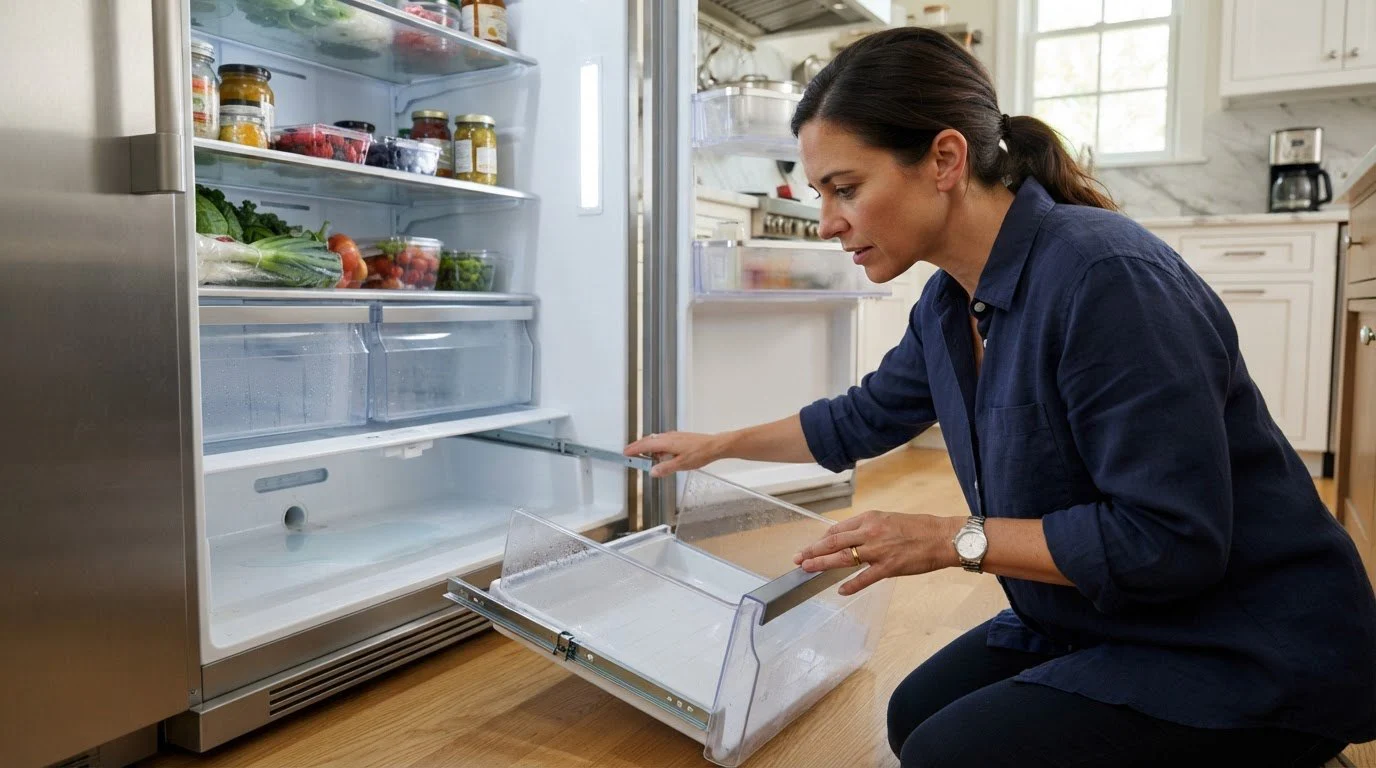
You pull out the produce drawer for the last of the carrots and find water standing at the bottom of the compartment, sometimes with a thin skin of ice. Spills from groceries are the easy explanation, but a repeating puddle is a signal. A refrigerator should not accumulate liquid in a place where nothing is supposed to drip.
There are three plausible origins, and the pattern tells you which one. Water from melted frost that cannot leave the cabinet, water from a leaking supply line that feeds the dispenser or ice maker, and plain condensation from moist food and a seal that lets humid air in. Each leaves slightly different evidence.
Every frost-free Samsung refrigerator melts the frost off its evaporator during a defrost cycle. The meltwater runs into a trough, down a small drain and out to a pan under the unit, where it evaporates. If food debris, ice or a frozen plug blocks that drain, the water backs up and can find its way into the fresh food area. The telltale sign is water at the back of the compartment, often with ice forming at the base of the rear wall, and it tends to return every day or two after you wipe it up.
If your model has a door dispenser or ice maker, a line and a filter housing run through the cabinet. A loose fitting or a cracked line can drip down the rear wall and collect under the drawers. Here the water is clean, and you may also notice a weak dispenser or ice maker that has stopped making ice.
Humid kitchens, especially in homes where steam from cooking has nowhere to go, let moisture into the cabinet when the door is opened often. A gasket that does not seal fully adds more. The result is dampness and light pooling, usually near the door side rather than the back wall.
If the front sits lower than the back, meltwater can run toward the front instead of toward the drain. This is common after a kitchen has been rearranged or a floor has settled.
Defrost issues may show up on the display. The listing for Samsung refrigerator 5E error code covers a fridge defrost sensor fault, and Samsung refrigerator 33E error code is an ice pipe heater error. Neither means a leak by itself, but either one with water below the drawers is worth reporting.
Do not push a wire or skewer into the drain, pour boiling water into the cabinet, or take off the interior panels. Heat can crack plastic and the drain sits next to heaters and wiring. Do not leave water standing for days: it can reach the floor under the unit, which matters in an upstairs flat or a condo with a neighbor below. If you see water spreading toward the base of the unit, turn off the supply valve and unplug the refrigerator.
If the puddle returns after you dry it, if ice builds at the rear base, or if a dispenser or ice problem accompanies the water, book a visit. We start by finding the source, then give a written estimate; nothing is done until you approve it. Details on how we work are in Samsung refrigerator repair, and the family overview sits in Samsung refrigerators.
Units with an in-door dispenser, such as the Family Hub Samsung RF32CG5900SRAA, have more water-line connections to inspect. Side-by-side models like the Bespoke Samsung RS23CB7600QLAA route meltwater through a separate path from the freezer side. The label is usually inside the fresh food section or on the door frame; keep the number handy.
While you wait for a visit, pull the crisper drawers and dry the compartment, then lay a folded towel at the base to catch any new water and check it twice a day. Keep produce in sealed bags or containers so it is not left sitting in liquid. If the unit stands in a galley kitchen with wood or laminate flooring, slide a shallow tray under the front edge to protect the floor from any overflow that escapes the cabinet. Photograph where the water appears; showing the location and timing helps the technician choose between the drain, the line and the seal on arrival.
Water that is cloudy, smells off or has food particles in it is more likely melted frost that has picked up debris, while clear and odorless water is closer to line or condensation. Mention that observation when you call.
Not always. Spills and condensation are common. If the water keeps returning with nothing spilled, treat it as a drain or line problem.
It can wet produce and containers and create ice in the compartment. The bigger concern is water spreading beyond the cabinet.
Meltwater reaches the drain only during defrost. If the drain is partly blocked, the overflow shows up after those cycles.
If the leak is small and contained, you can run it while you arrange service. If water reaches the floor or an outlet area, turn the unit off.
Cleaning helps hygiene but will not clear a blocked drain or fix a line leak. It does make it easier to see where the water appears.
Share a few details and we’ll confirm an appointment. Prefer to talk? Call us and we’ll help right away.