

Specialized Samsung Appliance Repair in San Francisco
Mon–Sat: 8:00 AM – 7:00 PM
Lettuce turns glassy, milk forms ice crystals, eggs crack. Find out why a Samsung fridge over-chills the fresh food side, what to check, and when to call a technician.
Salad greens that wilt into dark, glassy leaves, a carton of milk with ice crystals floating in it, yogurt that has gone grainy: these are the signs of a fresh food compartment running colder than it should. People often assume the fix is turning the temperature up, and sometimes that helps. But in a refrigerator the freezer makes the cold, and the fresh food side only receives a measured share of it. When that share gets too large, food freezes no matter what the dial says.
In most Samsung models a single evaporator in the freezer cools both compartments. A fan pushes cold air through ducts, and a damper on the fresh food side opens and closes to let some of it through. A temperature sensor in the fresh food area tells the control board when to open that damper. If the damper sticks open, if the sensor reads warmer than the real air, or if the fan keeps pushing too hard, the fresh food side keeps receiving cold air it did not ask for.
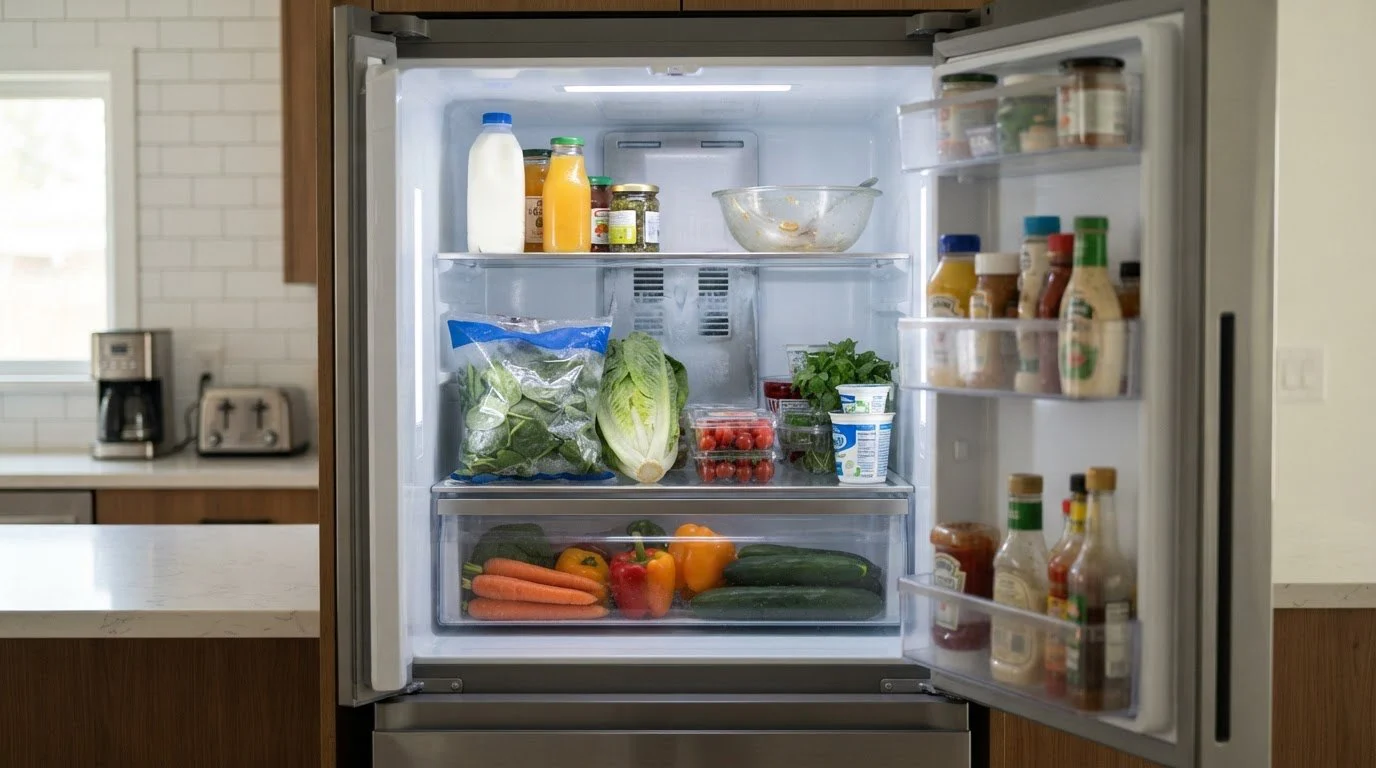
The cold air usually enters at the back wall or along the top of the fresh food section. Containers pushed hard against that spot get a direct blast. This is the simplest cause and the first thing to rule out, especially after a big grocery run.
A damper can stick from frost, from a bit of spilled food, or from a worn mechanism. When it hangs open, cold air flows constantly. A technician checks whether the door of the damper moves freely and whether the ducts are clear of ice.
If the fresh food sensor drifts, the board may think the compartment is warm when it is not. Frozen food in only one zone, such as the back of the lower shelf, but not elsewhere, points toward airflow rather than a bad sensor.
Frost on the evaporator restricts airflow, and the control compensates in unusual ways. If you also see frost buildup in the freezer or hear a fan scraping, the defrost system may be involved. The code Samsung refrigerator 5E error code is listed as a fridge defrost sensor error, and Samsung refrigerator 21E error code as a freezer fan error with no rotational feedback.
After an outage, a surge, or a cleaning session where someone touched the panel, a setting may have shifted to a colder target or a special cooling mode. Compare the display with what you normally use.
Do not remove the back panel inside the refrigerator, spray a de-icer into the ducts, or use a hair dryer on a frosted wall. The panel hides a fan, heater and wiring, and warm air can warp the plastic. Also avoid cranking the temperature to the warmest setting to stop the freezing: if the damper is stuck open, warmer food becomes a spoilage risk on the opposite side of the problem.
The duct layout and damper position are not the same on a French-door unit as on a top-freezer. A tall French-door model like Samsung RF32CG5B30SRAA routes air through several channels on the upper shelf level, while a top-freezer such as Samsung RT18DG6500SRAA has a simpler path from the freezer above. Read the label for your model, usually inside the fresh food wall or on the door frame, and give it when you book so the right parts list is ready.
Call us if the food keeps freezing after you have cleared the vents and adjusted the setting, if frost keeps returning, if you hear a fan rubbing, or if a code appears on the display. The visit starts with diagnosis: we check airflow, the damper, the sensors and the defrost path in turn. You receive a written estimate before any work, and nothing is repaired without your approval. Details on the wider service are in Samsung refrigerator repair, and the lineup guide is Samsung refrigerators.
Over-chilling is not only a food quality problem. A damper stuck open or a fan running when it should rest points to a part that is already wearing, and frost that follows can choke the airflow further. Catching the pattern early usually means a smaller job. Keep a short note of which shelf freezes things, how often, and whether it began after a power flicker, a move or a change of settings; that detail helps the diagnosis considerably.
Items that thawed again and look and smell normal are often fine, though texture suffers. Produce with glassy, collapsed leaves is usually past saving; use judgment with dairy and eggs and discard anything off.
Sometimes it softens the problem, especially if the setting was too cold. If the damper or a sensor is at fault, raising the setting only treats the surface.
The cold air enters near the back, so that zone sees the strongest flow. Items touching the vent area will freeze first when the airflow is excessive.
Not directly. A weak seal tends to cause frost and warm spots, but the control may then run the freezer more, which can push extra cold air to the other side.
Yes. The airflow principle is the same across series. The model number tells a technician which damper and sensor design to expect.
Share a few details and we’ll confirm an appointment. Prefer to talk? Call us and we’ll help right away.