

Specialized Samsung Appliance Repair in San Francisco
Mon–Sat: 8:00 AM – 7:00 PM
A frozen ice maker and a bin full of fused cubes point to leaking air, weak water flow or a heater problem. See the checks to try and when to book.
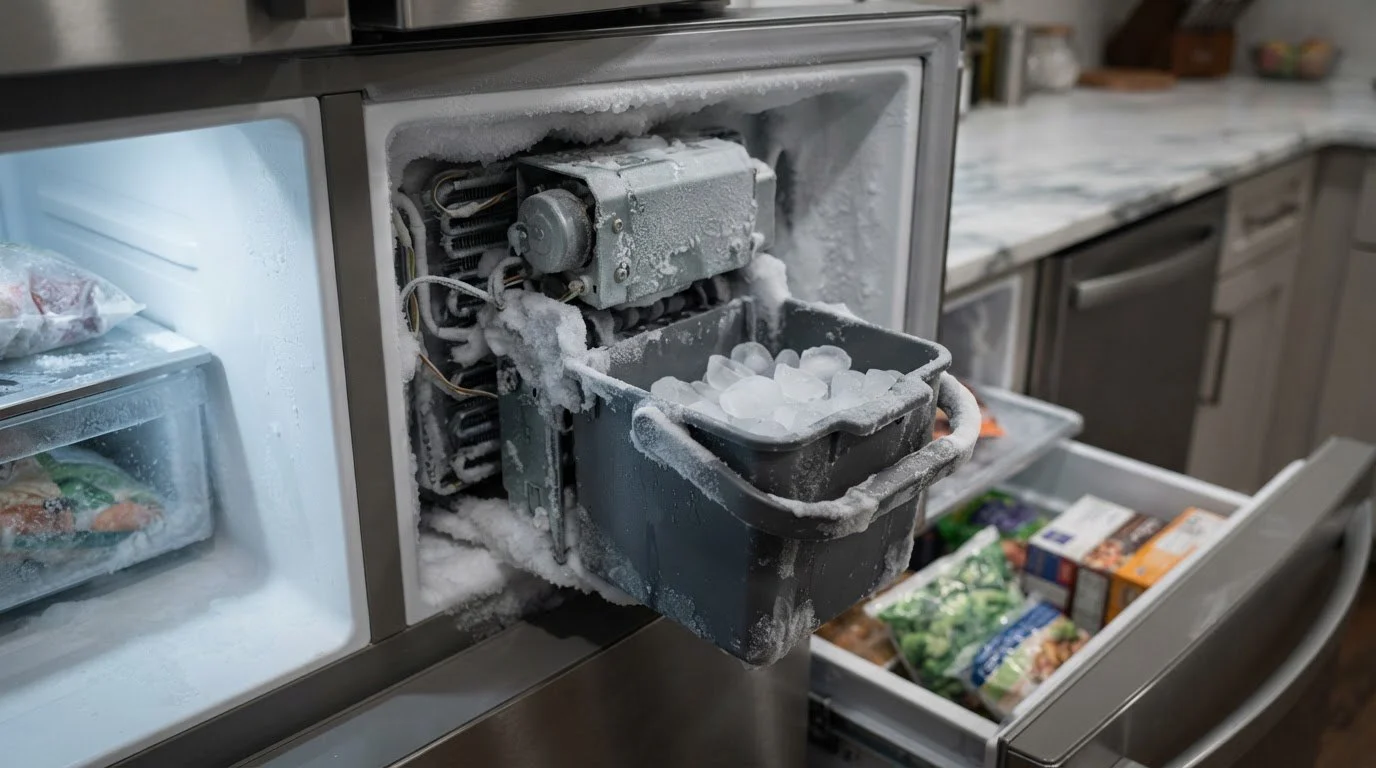
The ice bin is a solid lump, the dispenser chute is jammed, or the tray in the freezer is wrapped in frost and nothing drops. When a Samsung ice maker freezes up, it usually means water is reaching the wrong place or freezing where it should not. The bucket gets glued together, and the ice maker then stops producing altogether.
An ice maker needs a measured amount of water, cold air around the mold, a way to release finished cubes, and a clear path to the bin. When any one of those fails, ice melts a little, refreezes, and fuses into clusters. Over time, frost builds in the chute, around the auger and on the ice maker cover. Then the dispenser makes a grinding sound or a click and delivers nothing.
Some models display a code when the ice system struggles. The 33E code relates to the ice pipe heater. The 39E code is an ice maker function error, and the 14E code refers to the ice maker sensor. Write down exactly what appears and when. Do not guess at a reset sequence.
Look at the ice itself. Cubes that are small, thin or hollow point to weak water flow. Cubes that are normal but glued into one mass point to humidity or long storage. Frost on the ceiling of the freezer and around the door edge points to a gasket or a door that is left ajar. A thick sheet of ice at the chute opening, with a bin that is otherwise fine, suggests the small heater near the dispenser is not keeping the path clear.
Also think about timing. Did the trouble start after a power cut, a long trip, a new filter or a delivery that moved the refrigerator? Each of those leaves a different trail, and the answer helps the technician head straight to the right area.
Apartments in San Francisco often have a refrigerator tucked in a recess with little room on the sides. Poor airflow around the back makes the freezer work harder. Water lines may run through a wall with a small saddle valve that has been in place for years, and low flow there is a quiet cause of uneven ice. If your refrigerator is in a rental, ask when the water filter was last changed. A tired filter slows the fill and produces hollow, frosty cubes.
If the freezer door is opened often, as in a household with children or a busy kitchen, moisture adds up. Put the ice bin back fully and make sure the door swings shut on its own.
Book when the bin refreezes into a block after you cleared it, when the dispenser stays stuck, when a code appears, or when you see frost around the ice maker cover. A technician checks the door seal, the fill, the heater path and the sensor, explains what failed, provides a written estimate and does not repair anything without your approval.
Start with Samsung refrigerator repair and the Samsung refrigerators guide. Related models include the Samsung RF32CG5B30SRAA and the Samsung RS28CB760012AA.
Ice that melts slightly and refreezes fuses into a block. Door gaskets that leak air, infrequent use and a weak fill are the common reasons.
No. A tool can crack the bin or damage the auger. Let the ice thaw and empty the bin instead.
A jam in the chute or auger is likely. Let any visible ice melt, clean the bin, and if it returns, book a visit.
Yes. A clogged filter reduces flow, which makes small or hollow cubes and can cause uneven fills.
If you have the control, switching it off prevents more water from freezing in the wrong place. Do not repeat it often.
Share a few details and we’ll confirm an appointment. Prefer to talk? Call us and we’ll help right away.