

Specialized Samsung Appliance Repair in San Francisco
Mon–Sat: 8:00 AM – 7:00 PM
Water pooling under or around the base of your Samsung dishwasher? Learn how to trace it to the door, hose or tub, and which steps are safe to take at home.
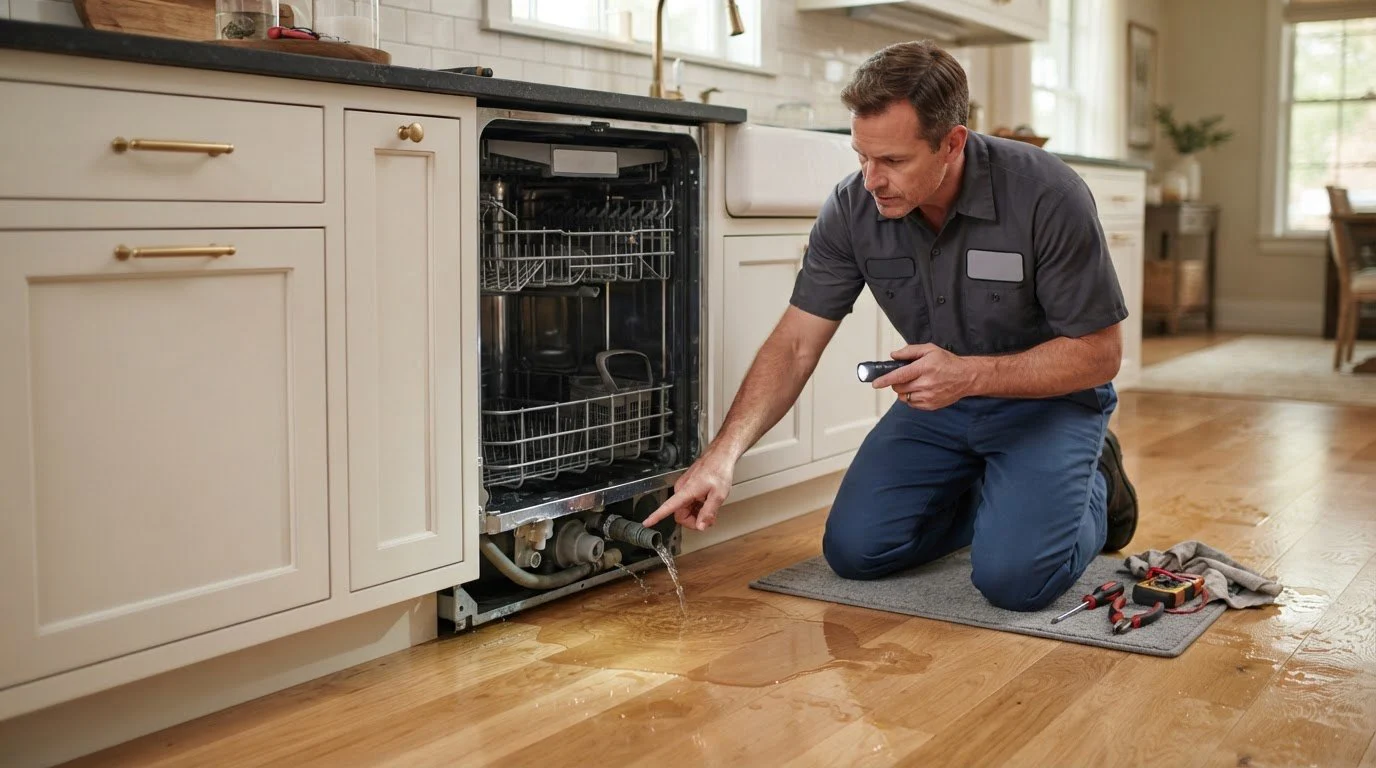
A damp patch on the floor in front of a dishwasher can mean a few drops from an overfilled door gasket or a steady leak from a failing part. Treat any leak as a reason to take a careful, ordered look. Water near an electrical appliance is a safety matter first and a repair matter second, and the base of a dishwasher is where the electrical parts, pumps and hoses all meet.
If water is pooling, switch the dishwasher off at the breaker. Close the water supply valve under the sink. Mop up the floor so that you can see where fresh water appears. In flats and condos with a unit below you, a leak can cause damage beyond your own kitchen, so do not postpone this. If water has reached the outlet or the breaker panel, keep away and call a licensed electrician from a dry area.
Dry the floor and the front of the dishwasher. Slide a piece of paper or a dry towel under the unit’s front edge. Run a short cycle and stop it as soon as you see new water, watching the following spots:
San Francisco kitchens often squeeze a dishwasher between a sink cabinet and a wall, with limited room to see the hoses. In older flats, drain lines sometimes join a shared stack or a disposal with a tight connection, and a hose clamp that has aged may weep only when the pump pushes water through. A dishwasher that sits slightly out of level can send water toward the front edge, and a unit that was moved after a remodel may have a hose pinched behind it. Landlords and property managers should also check whether the cabinet floor under the dishwasher has softened, because a long-running slow leak can be invisible until the wood swells.
Do not run the dishwasher to see if the leak goes away. Do not take off the kick plate and handle wiring while the circuit is live. Do not pull the unit forward by the hoses, and do not seal anything with caulk or tape as a fix. If the leak is steady, leave the machine off and the supply valve closed until it is diagnosed.
Book if you see water from the base after the gasket and detergent checks, if a leak code appears, if the cabinet floor is wet or soft, or if you cannot trace the source. We diagnose before repair and give a written estimate, and nothing is repaired without your approval. See Samsung dishwasher repair and the Samsung dishwashers guide, or look at the DW70H83YETRAA model page for an example. If you are unsure of your model, read how to find the model number.
Once the source is found and the dishwasher is safe to use, dry the cabinet floor thoroughly and check the neighboring cabinets and wall for staining. Wood that stays damp can swell and grow mold. If water ran toward a neighbor’s unit in a multi-family building, tell your property manager early, so the damage can be checked before it spreads. Keep photographs of the wet area and of the machine as a record.
No. Switch it off at the breaker and close the supply valve until you know where the water comes from.
Yes. Hand soap foams heavily and pushes water out around the door. If you used the wrong product, clear the suds and run a rinse with no detergent.
It means a sensor in the base detected moisture. The water still has a source that needs to be found, and the code alone does not identify it.
Water at the door corners suggests the seal or door fit. Water that appears at the base front with the door shut points inside the unit.
A written estimate after diagnosis documents the cause and the work required, which is useful for a property manager or building owner.
Share a few details and we’ll confirm an appointment. Prefer to talk? Call us and we’ll help right away.