

Specialized Samsung Appliance Repair in San Francisco
Mon–Sat: 8:00 AM – 7:00 PM
Finding a half-melted pod or gummy residue after a cycle? It usually comes down to water reaching the dispenser, spray coverage or loading. Here is what to check.
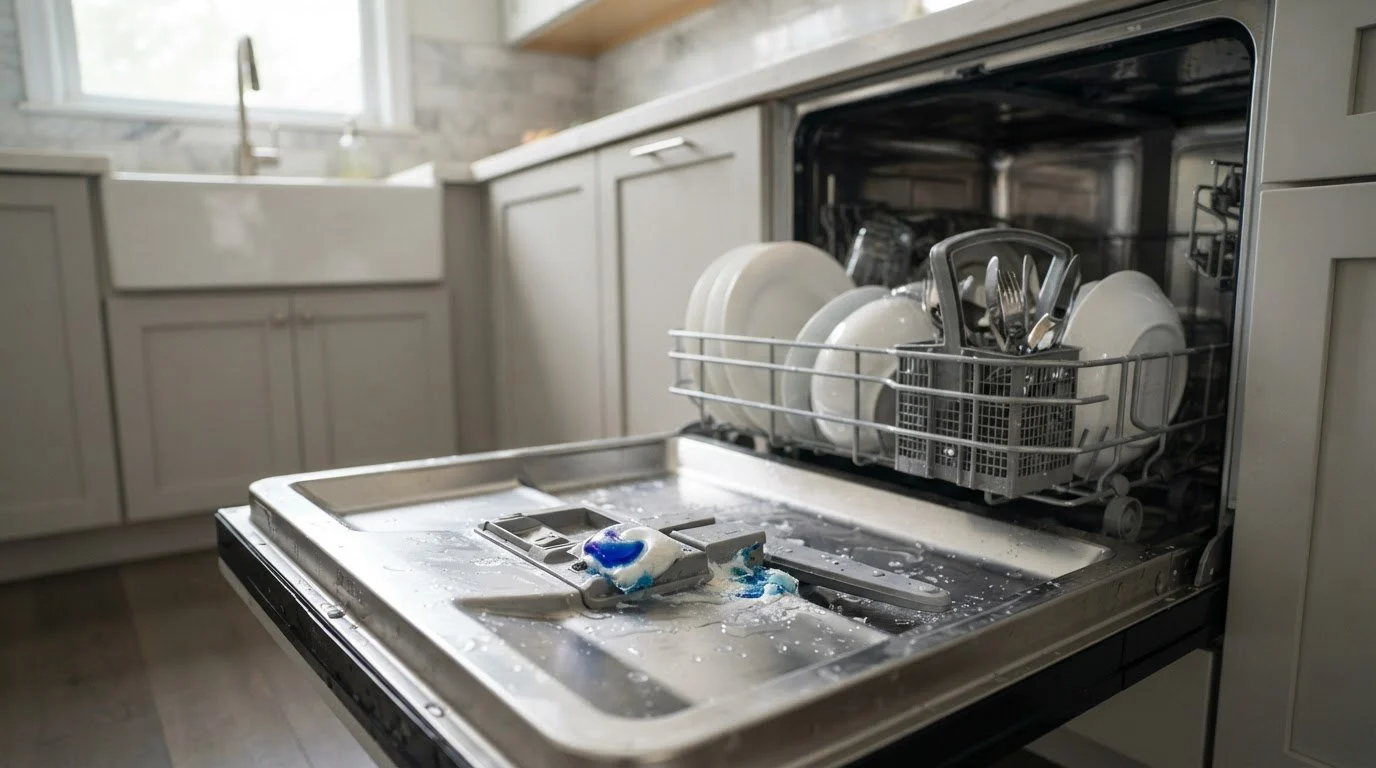
You open the door expecting clean plates and find a pod still wrapped in its film, or a sticky blue smear in the dispenser tray. The first reaction is to blame the detergent. Sometimes that is fair. More often, the pod did not receive the water it needed, at the moment it needed it. The dispenser, the spray arms, the water supply and the way the tub was loaded each play a part.
When the cycle reaches the wash phase, the dispenser door opens or the pod is exposed to water sprayed into the tub. Water dissolves the film, and the spray arms distribute the detergent. If the door of the dispenser is jammed shut, if a dish blocks it from opening, or if too little water reaches the pod, it sits partly intact until the cycle moves on. That is why leftover film usually has a physical explanation.
Look at the spray arms. Spin each one by hand and make sure it turns freely and does not catch on a dish. Check the small holes for rice, seed or food scale that prevents spray from forming. Remove and rinse the filter at the tub’s bottom, following the guidance in your manual, and clear the drain screen of debris. A blocked filter or screen can leave a tub with less water than it should have, which weakens spray and can leave pods whole.
Also confirm that the water inlet is fully open. If the cold-water valve under the sink is partly closed, the dishwasher may take in too little water. A cycle that starts, tries to fill and quits early may display a code; the Samsung dishwasher 4C5 code page and the 9E low-water code page describe those situations.
Pods rely on warm water, and a long run of cold pipe between the water heater and a kitchen can mean the first water into the tub arrives cool. Running the kitchen tap until it is warm before starting the dishwasher is a common owner habit. If your home has a hard-water supply, mineral buildup may also coat the tub and the dispenser, so a regular cleaning run with a product made for dishwashers helps.
Do not drop pods into the tub bottom to get around a dispenser issue unless the manual allows it, because they can land in the filter and block drainage. Do not pry the dispenser lid open with a tool. Do not open panels or disconnect the door hardware. If the dispenser fails to open on its own after the checks above, a faulty latch or actuator may be involved, and that is for a technician to inspect.
If the dispenser looks clean, the arms spin, the filter is clear, the supply valve is open and pods still do not dissolve, the problem may lie with the circulation pump, the inlet valve or the dispenser mechanism. You may also see repeated cycles that end early, standing water, or a code. That is the point to book a diagnosis. Read more on our Samsung dishwasher repair page, and see the lineup on the Samsung dishwashers guide. To see how a specific model entry reads, open the DW50T6060US/AA dishwasher page.
After the checks above, run a short cycle with the tub empty except for a single pod in its compartment, and pause it partway to look at the dispenser through the door. If the lid has opened and the film is breaking down, the earlier problem was probably loading. If the lid is still shut or the pod sits untouched, note that and mention it when you book. Let the tub cool and wait before touching anything hot, and never reach in while the spray arms are running.
In rentals and older flats, the dishwasher may have been installed years before you arrived, and its supply valve or hot-water line may never have been looked at. If you do not know the history, note how long the kitchen tap takes to run warm, and tell your property manager if the dishwasher has never dissolved pods properly. That history helps whoever diagnoses it later.
No. Loading, a blocked dispenser and a clogged filter are common reasons, and those are owner checks. A fault in the pump or inlet valve is a possible, but later, explanation.
You can try, since powder does not rely on a film dissolving. But if pods fail because water is not reaching the tub properly, powder may leave residue instead.
A dish touching the lid, detergent crust around the latch or a worn release mechanism can all keep it closed. Clear the first two yourself; the third needs a technician.
It can contribute by leaving mineral deposits on the tub and dispenser. Regular cleaning helps, though it does not replace fixing a real supply or pump problem.
Book when the checks above make no difference, or when you also see standing water, early cycle ends or a display code.
Share a few details and we’ll confirm an appointment. Prefer to talk? Call us and we’ll help right away.