

Specialized Samsung Appliance Repair in San Francisco
Mon–Sat: 8:00 AM – 7:00 PM
A strange new sound is easier to diagnose when you describe it well. Learn how to record when it happens, what it sounds like and what changed.
Most people describe an appliance noise with a word: buzzing, clunking, squealing. Those words get you part of the way, but the useful details are when it happens, how long it lasts and what the appliance was doing at that moment. A noise that appears only during a spin, only in the first minute of a cycle, or only when the compressor starts tells a technician far more than a noise described as loud. Documenting it takes little effort and often shortens the diagnosis.
Put the sound in one of a few rough groups, because each group points toward different areas of an appliance.
A short note on your phone beats memory. Capture these points:
Time of day sometimes matters more than people expect. In San Francisco flats where a refrigerator sits against a thin wall, the quiet at night can make a normal sound seem louder. Note whether the sound is actually new or just newly noticeable.
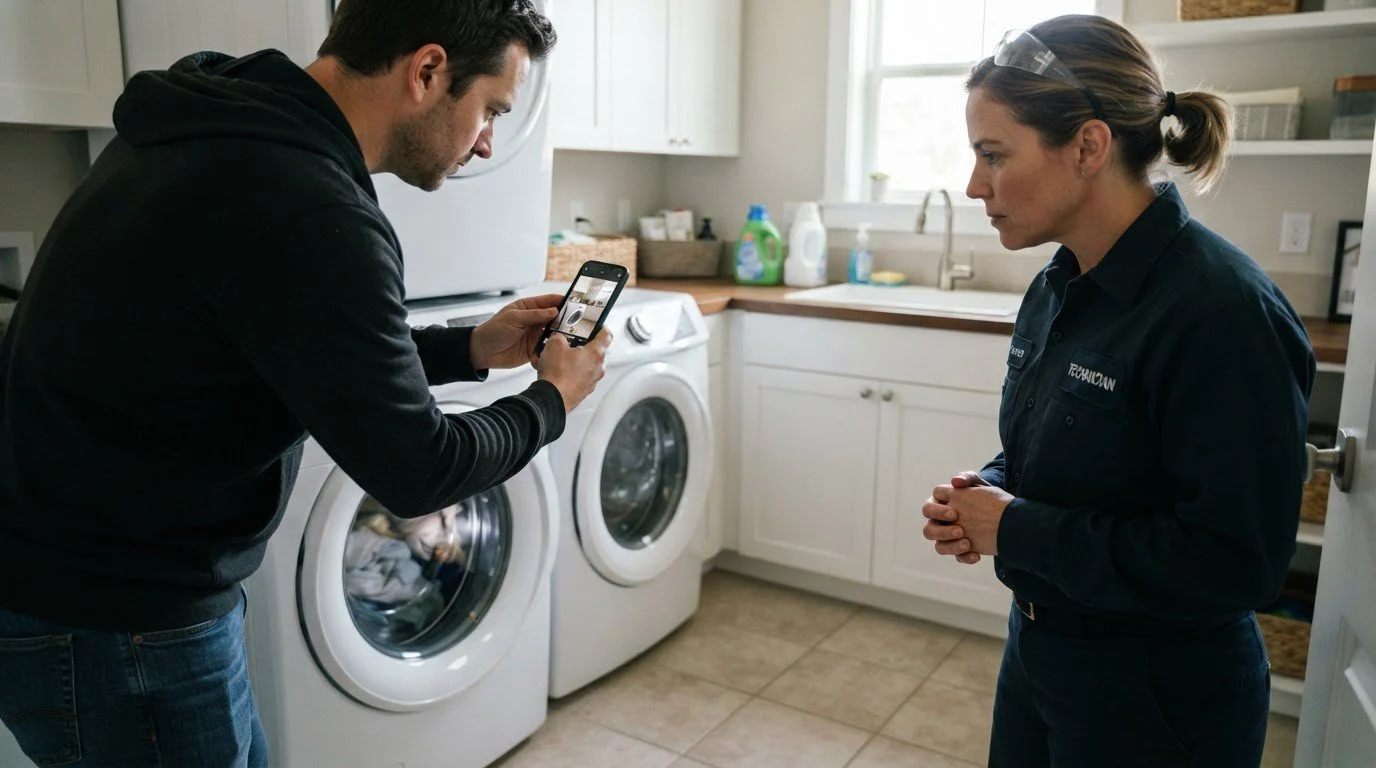
Use your phone and keep it short. Place it near the appliance but not touching it, since contact with a shaking surface muffles the recording. Show the appliance in the frame at the start so the clip is clearly tied to the unit, then let it run through a few repetitions of the sound. If the noise only occurs during one stage of a washer or dishwasher cycle, record that stage and say aloud which stage it is. A clip of the sound on its own, without the appliance state, is far less helpful.
Take a second, quiet clip with the appliance off. It shows what the room sounds like without the unit and helps separate appliance noise from a neighbor, plumbing or a ventilation fan.
A few harmless checks sometimes solve a noise outright:
Do not open panels, run a unit with the back cover removed, or test live parts to chase a sound. If you smell burning or see sparks, switch the breaker off and leave the appliance idle. If there is a gas smell, leave the home, avoid switches and call the gas utility or 911 from outside.
Stop and book promptly if the noise is accompanied by a burning smell, a hot panel, water on the floor, smoke, or repeated breaker trips. A grinding sound from a washer drum or a squeal from a dryer drum that gets worse with each load is another sign not to keep running it, since small wear turns into larger damage.
If your noise comes with a clear symptom, the specific guides may fit better: Samsung washer grinding, rattling and knocking or Samsung dishwasher grinding, humming and rattling. For the repair itself, see the service page for your appliance, such as Samsung dryer repair or Samsung refrigerator repair, and we will diagnose before proposing any work, with a written estimate and your approval first.
When you contact us, mention the clip and the notes in your first message rather than leaving them for the visit. Say which stage of the cycle the sound belongs to and whether it is louder at the start or the end. If several people in the home hear it differently, include each description. Small differences in how people describe a noise, a tick versus a tap, can help narrow the source, and a technician can compare those words with what is heard once the appliance runs in front of them.
Yes. Intermittent noises are the hardest to catch in a visit, so a clip may be the only evidence a technician sees. Keep your phone ready and record the next time it happens.
No. Appliances make normal sounds as water fills, valves open and motors start. A noise is worth attention when it is new, louder, changing, or paired with poor performance.
For mild, stable sounds, usually yes. For grinding, burning smells, leaks or sounds that worsen quickly, stop using it and switch it off.
Sometimes. Pipes, ventilation fans, floors and shared walls carry sound. The quiet clip with the appliance off helps tell the difference.
The model number, a description of when the sound happens, any display code, and the clip if you have one. That is enough for a prepared first look.
Share a few details and we’ll confirm an appointment. Prefer to talk? Call us and we’ll help right away.