

Specialized Samsung Appliance Repair in San Francisco
Mon–Sat: 8:00 AM – 7:00 PM
Sparking in a microwave can come from metal, baked-on grease or a damaged cavity. Stop it first, then follow the checks and see when to book.
A flash, a crackle, a blue streak across the cavity. When a microwave sparks, the first move is simple: stop it. Press stop or open the door, and do not run it empty again. Sparking, often called arcing, happens when electrical energy jumps between two points instead of being absorbed by food. Sometimes it is harmless residue. Sometimes it is a sign that something inside the oven is damaged.
Cancel the cycle and unplug the oven if you can reach the plug without strain. For an over-the-range model, switch the circuit off at the breaker instead. If you see flames, keep the door shut, switch off the power at the breaker, and call 911. A burning smell or smoke is a reason to stop using the oven until a technician has looked at it.
A single brief spark when you heated a spinach dish or a bowl with a metallic rim is easy to explain, and the oven may be perfectly fine afterward. Repeated sparking, a crackle that comes back on different foods, or a smell that lingers after the cycle ends is another matter. Think about how long the oven has been doing it. If you noticed a small flicker weeks ago and ignored it, the damaged spot may have grown, which is how a minor coating problem turns into a hole in the cavity wall.
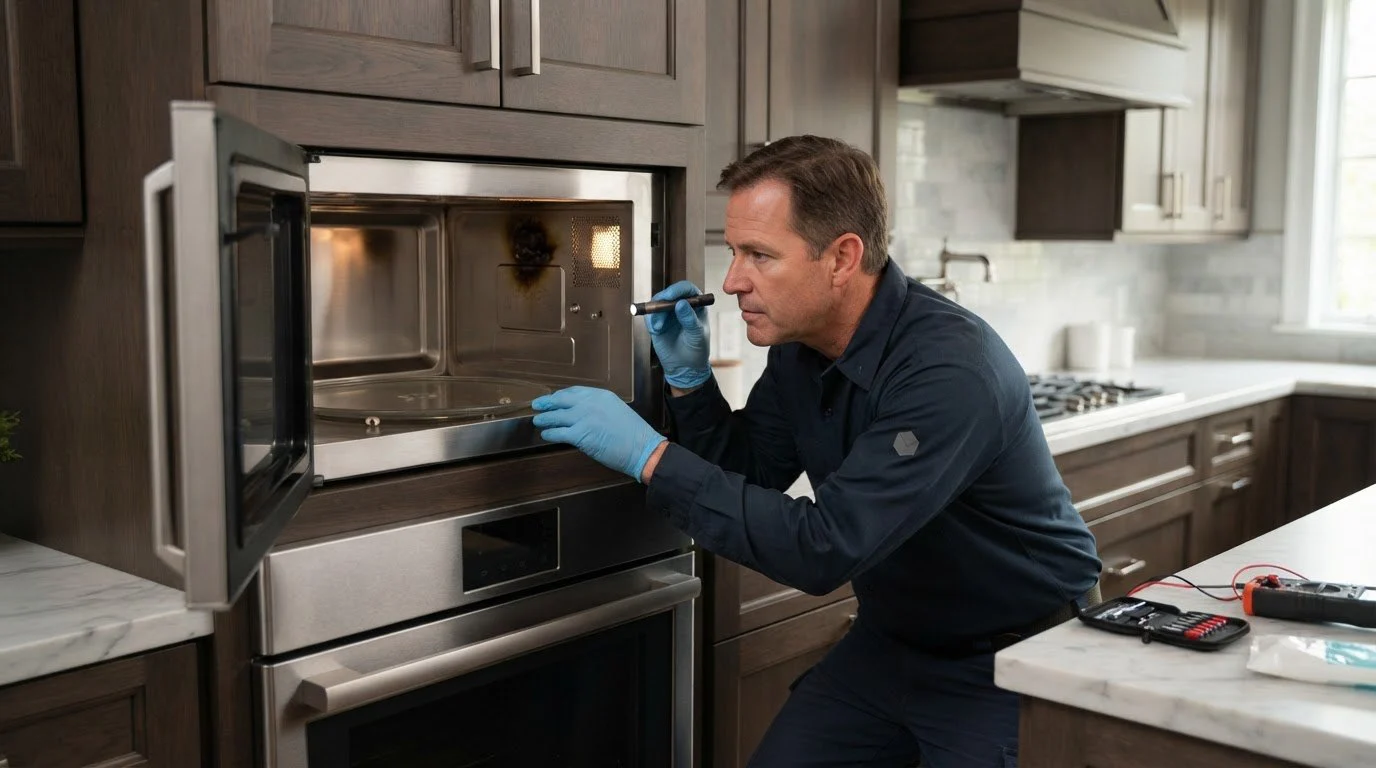
With the oven off and cool, wipe the inside with a damp cloth and mild soapy water. Pay attention to the corners, the ceiling and the area around the waveguide cover. Never remove the cover; just look at it. A crusty brown patch there means food has baked on, and a hole or a crack means it should be replaced by a technician.
Check the cavity walls for chipped paint or bare metal. Check the door seal and the inside of the door for burn marks or warping. Make sure the turntable sits properly on its support and rotates freely. Remove any metal rack unless the manual says it belongs in that mode.
If you wiped away residue and want to test, place a cup of plain water in the oven and run it briefly while watching through the door. Any new spark means stop immediately and leave it unplugged.
Cover bowls with a microwave-safe lid or vented wrap so splatter stays off the walls, and wipe the cavity after anything that boils over. A bowl of water with a slice of lemon, run briefly, loosens stuck-on film before you wipe. Check the ceiling too; it is the spot people forget, and it is exactly where a small carbon patch begins.
A microwave mounted above a gas range in a flat or condo catches cooking grease constantly, so residue-related sparks are more common there. Over-the-range models such as the Samsung ME21DB650012AA also run a vent fan above the burners, and heavy splatter on the underside can reach the controls. Countertop units like the Samsung MS19DG8500MTAA are easier to inspect, but they are often placed too near the wall, so heat and grease build up on the back. If an oven shows a code during the problem, note it, and look at the pages under Samsung error codes for the family.
Book if sparks happen with plain water, if the cavity has bare metal or burnt spots, if the waveguide cover is damaged, or if the door no longer closes squarely. A technician looks at the cavity, the door, the cover and the supply, explains what failed, and gives a written estimate before any work. Nothing is repaired without your approval. If the oven is old or the damage is heavy, our repair or replace decision framework can help you think it through.
Read Samsung microwave repair and the Samsung microwaves guide. The label with the model number is usually on the cavity frame or behind the door.
Not until you find the cause. If the cause was a metal item, remove it and test with plain water briefly. If it sparks again, stop and leave it unplugged.
Yes. Baked-on grease and food can carbonize and spark. Clean gently, then test with water.
It is the waveguide cover. If it is burnt, cracked or greasy, do not use the oven and book a visit.
The shape and moisture can focus the energy at one point. It is a food effect, not always a fault.
If the cavity is damaged or burnt through, a technician can tell you what is possible. Age and the extent of damage matter.
Share a few details and we’ll confirm an appointment. Prefer to talk? Call us and we’ll help right away.